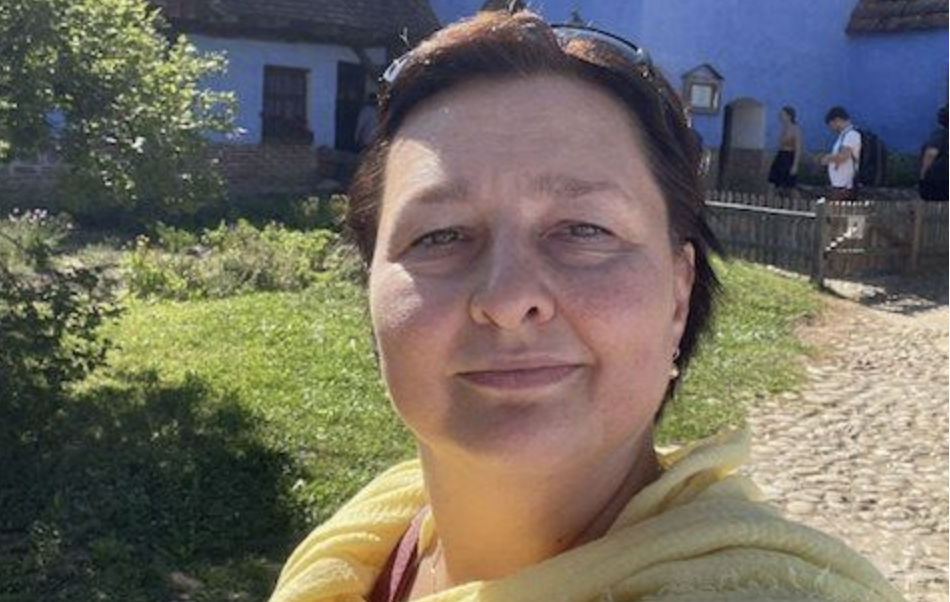
Summer 2024, my adventures took me to a place new to me, even though it is in the country I was born in: Romania. Yet, it is in a different region, with a different history, and with a population formed by other minorities and ethnicities aside from the Romanian one: Haferland is a small area in Transilvania, between Brasov and Sibiu or Kronstad and Hermanstad, as the German minority calls them.
You may wonder why there are German people in Romania, a couple of countries away from Germany?
Long story short: once upon a time, Transilvania was part of the Hungarian Empire and then part of the Austro-Hungarian Empire. To consolidate Transilvania’s borders, representatives of the rulers were needed in the area, both to mark the royal presence and to defend the borders with the Ottoman Empire at the time. These marks were German settlers who were promised land and some money if they wished to make a life in a new place. Therefore, German families who wanted this opportunity traveld East and settled in these regions.
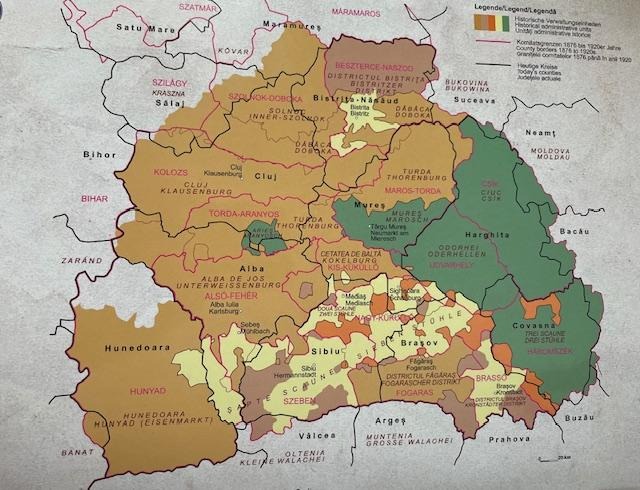
This happened for the first time about 8 to 900 years ago (the map you see is from 1876), and I would assume that at the time, people who took such radical decisions to move to a new country, where they were risking invasions and wars, did not have a good life where they were. People do not just leave a place if they have a good life where they are. In this particular case, I could think of few reasons:
- they were poor and the promise of a life where food and shelter could be easily provided in exchange for hard work, sounded better;
- they were adventurous and wanted to take on new opportunities,
- they were frozen out of their communities for various reasons.
I am sure there are many other reasons. Yet, behind all logical explanations, we find feelings: the wish to feel better, safer, less hungry, less ashamed and perhaps more important.
And even if none of the reasons above were valid, perhaps they did not feel they belonged to the place or were valued where they were. After all, reality and wealth, as we see it from the outside, rarely match the emotions people feel, since we do not see them, and comparing our inside with other people’s outside is seldom a good idea.
With all this in their “invisible luggage” and under the king’s protection, they started new lives in a foreign country with a foreign language. Despite that, they worked hard, were prosperous, and paid taxes. In time, they became strong and with a word in the rulers council.
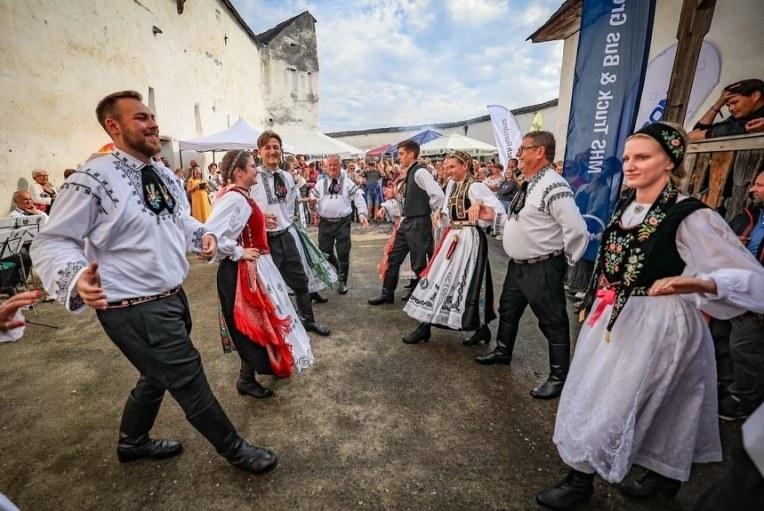
Yet even if they were in a foreign country, they kept their language, traditions, and religion. Travelers can find many fortified evangelic churches. It is impressive that, after hundreds of years, people still speak the language of their ancestors. It is also true that being wealthy, they could build schools where the teaching language was German. Those schools exist today, and many people choose German schools over Romanian, even if they do not have German ethnicity.
Trade was free at the time, and people were allowed to travel for business or visit relatives across the Austro-Hungarian Empire. After WWII, Romania became communist, and soon after, the borders were closed for five decades. German families could neither communicate nor travel to see each other. Many people emigrated and asked for political asylum and risked their lives crossing borders illegally. One example would be the Nobel Prize winner Herta Müller, born in 1953 (Nițchidorf) and who fled the country illegally in 1987. You find more information about her on this link.
Therefore, 35 years ago, when the Iron Curtain fell, Romania opened its borders again, and a quarter of a million Romanian citizens of German ethnicity moved to Germany. Just like their ancestors, people made a radical decision and moved to a better place, a safer place where they were valued and where they could have the support of their extended families. One more time, just like before, they left behind family members, properties, land, and houses, which now stay empty, and many fall apart.
Yet, their roots are still in Transylvanian lands, and many visit every year to reconnect with their childhood. They also bring their children, who were born in Germany and are curious about their legacy in Romania. The migration circle is closing through travels back and forth through time and space. Some people seem bound to live experiences similar to those of their ancestors again as if such emotional journeys are necessary for collective memory. People would better understand why things happen the way they did, and this way, they could heal old wounds.
HAFERLAND WEEK 2024
To celebrate the German community and centuries-old traditions, Veronica and Michael Smidt’s Foundation started organizing a festival called Haferland Week. It is meant to take place in ten almost deserted villages in the area, revive the region, and bring together relatives who may not meet otherwise. In the past 12 years, it has been arranged, the festival grew, and more people became engaged in the project, from business people to diplomats and royal houses.
This year, over 8,000 people of all ages from Romania, Germany, the United Kingdom, Netherlands, Austria, Israel, the USA, Norway, Hong Kong, Spain, and other European countries participated in the 2024 edition of Haferland Week.
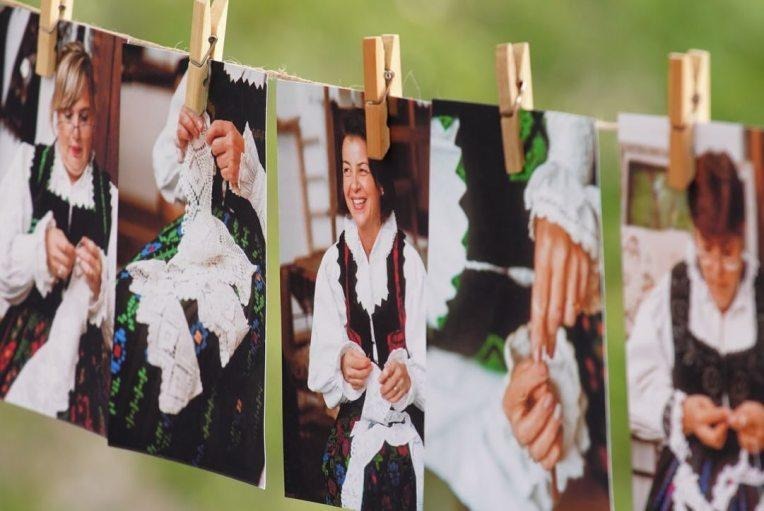
• Almost 60 events, from concerts to conferences, guided tours, workshops and exhibitions
• For the second consecutive year, the event was organized under the high patronage of a member of the Princely House of Liechtenstein – Prince Philipp von und zu Liechtenstein
• Also, for the first time in its history, the festival took place under the auspices of the Royal Family of Romania
• During the festival, the annual meeting of the Romanian-German Bilateral Collaboration Forum took place
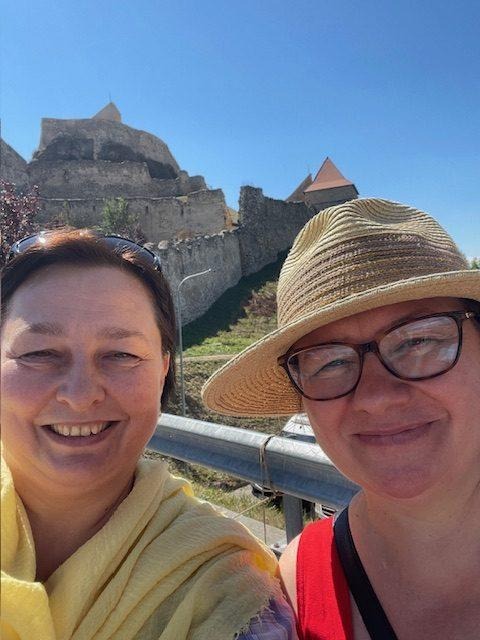
• The festival marked the 700th anniversary of the first documentary attestation of the Rupea Fortress, an event attended by around 2,000 people. You see it behind us, in the picture. Next to me you see the very PR manager of the event Haferland Week, Ana Maria Jitarita: the best they could ever find.
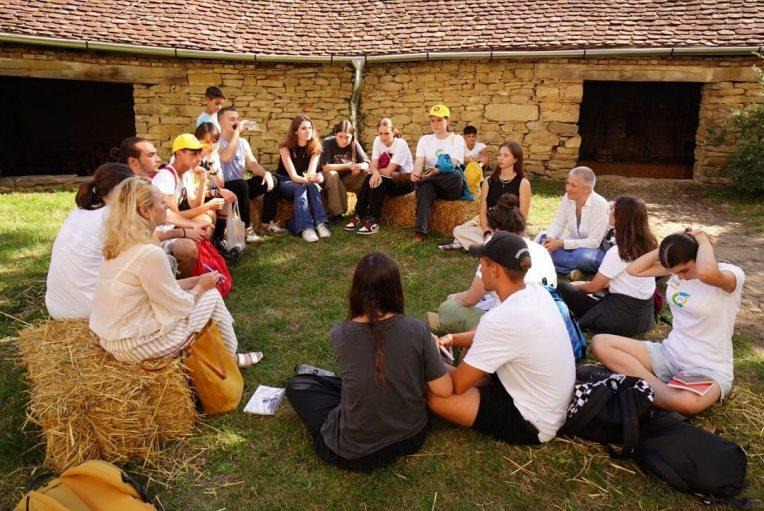
• For the first time, the festival hosted an adventure camp and non-formal education for young people and teenagers in partnership with The Duke of Edinburgh’s International Award, a global organization founded in Great Britain.
IN HIGH SOCIETY
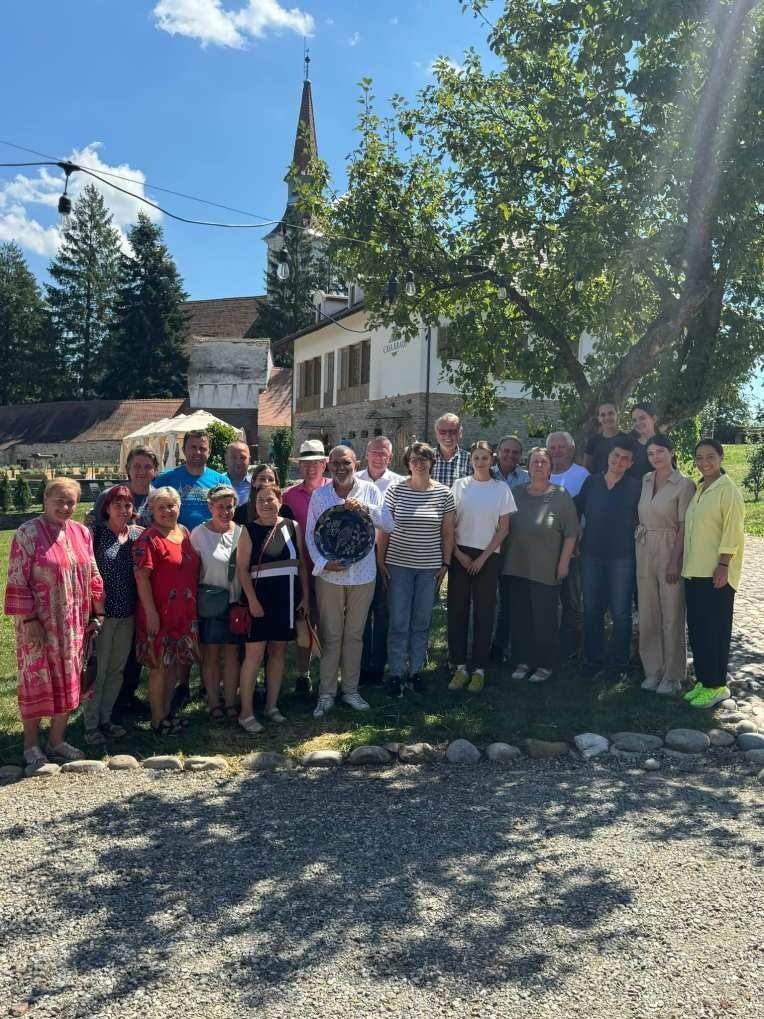
2024 Summer edition, together with the organizers – Mr. Michael Schmidt, president of the M&V Schmidt Foundation, and Ms. Veronica Schmidt, vice-president of the Foundation – personalities such as His Serene Highness Prince Philipp von und zu Liechtenstein, Prince and Princess Alexander von und zu Liechtenstein were present; His Excelency. Dr. Peer Gebauer, German ambassador to Romania, H.S. Emil Hurezeanu, Romania’s ambassador to Austria, H.E. Willemijn Van Haaften, the ambassador of the Netherlands in Romania, H.E. Adriana Stănescu, the Romanian ambassador to Germany, Mr. Adrian Ioan Veștea, the Minister of Development, the former British ambassador to Bucharest, Mr. Andrew Noble, representative of the Board of Directors of the M&V Schmidt Foundation, and Șerban Todorică, the president of the Brașov County Council, and Mr. Alexandru Opriș, mayor of the city of Rupea.
Also present were Dr. Bernd Fabritius, president of the German Federation of Expatriates, Mr. Rainer Lehni, president of the Association of Transylvanian Saxons in Germany, Mr. Martin Bottesch, president of the Democratic Forum of Transylvanian Germans, and Mr. Gunther Krichbaum, member of the German Bundestag.
Credit for photos: Haferland Week (Saptamana Haferland) and the PR team, and some selfies
Fun fact
King Charles of Great Britain has bought property in Viscri village, and locals say he comes several times a year to walk in the hills and relax in the area. Check the property where YOU can also stay on this link. In the picture, you can see me, visiting the very place